
The Alchemist
The Alchemist (original Portuguese title: O Alquimista) is a novel by Brazilian author Paulo Coelho, first published in 1988. It blends elements of quest, adventure, fantasy, and bildungsroman into a philosophical allegory. The story follows Santiago, a young Andalusian shepherd, who repeatedly dreams of a treasure buried near the Egyptian pyramids. Convinced it is a prophecy, he sells his flock, travels to Tangier, and across the Sahara Desert, encountering a series of mentors: Melchizedek, a mysterious king who teaches him about Personal Legends; a crystal merchant who shows the cost of unfulfilled dreams; an Englishman obsessed with alchemy; and finally the enigmatic Alchemist himself. Through trials, love, and self-discovery, Santiago learns to listen to his heart and read the omens scattered along his path, ultimately realizing that the true treasure lies not in the gold but in the journey itself. Core themes include the pursuit of one's destiny, the interconnectedness of all things (the Soul of the World), the importance of courage and faith, and the idea that the universe conspires to help those who follow their dreams. Coelho wrote the novel in just two weeks after a spiritual awakening during his 1986 pilgrimage along the Road to Santiago de Compostela, inspired by a story from One Thousand and One Nights. Despite initial obscurity—the first Brazilian edition of only 900 copies failed to sell—the book gained momentum after its 1993 English translation and became a global phenomenon. It spent 303 weeks on The New York Times bestseller list, topped charts across Europe, and has since been translated into roughly 80 languages, selling over 65 million copies worldwide. The Alchemist remains one of the best-selling books in history, often cited as a transformative work that has inspired millions to pursue their personal legends. Its influence extends into popular culture, self-help, and spiritual literature, cementing Coelho's reputation as a modern sage.
The novel has been the subject of several film adaptation attempts. In 2008, the Weinstein Company acquired the film rights, but the project stalled following the 2017 Harvey Weinstein sexual abuse scandal. In 2016, PalmStar Media secured the rights, and in 2023, Legendary Entertainment obtained the film, television, and ancillary rights to develop an adaptation in partnership with TriStar Pictures and PalmStar Media, with Jack Thorne attached as screenwriter.
About the Author
Paulo Coelho de Souza was born on August 24, 1947, in Rio de Janeiro, Brazil, into a middle-class Catholic family. He attended a Jesuit school, and as a teenager, expressed a desire to become a writer, a dream his parents opposed. At age 17, his introversion and refusal to follow a conventional path led his parents to commit him to a mental institution, where he was confined three times until his release at 20. He later enrolled in law school at his parents' insistence but dropped out after a year to embrace a hippie lifestyle, traveling across South America, North Africa, Mexico, and Europe while experimenting with drugs. Returning to Brazil in 1972, Coelho began a successful career as a lyricist, writing for iconic Brazilian artists such as Elis Regina, Rita Lee, and Raul Seixas. In 1974, he was briefly imprisoned by the military dictatorship for political activism. He then worked as an actor, journalist, and theater director. His first book, Hell Archives (1982), was self-published and largely ignored. A second, The Practical Manual of Vampirism (1985), was later withdrawn by the author due to its poor quality. A turning point came in 1986 when Coelho walked the Road to Santiago de Compostela, a 500-mile pilgrimage, as an initiation into the Catholic order RAM. This journey inspired his first major success, The Pilgrimage (1987), a semi-autobiographical account of spiritual awakening. The following year, he published The Alchemist, which initially sold poorly but eventually became a global phenomenon. His subsequent novels include By the River Piedra I Sat Down and Wept (1994), The Fifth Mountain (1996), Veronika Decides to Die (1998), and The Devil and Miss Prym (2000). Coelho’s works have been translated into roughly 80 languages and sold over 145 million copies worldwide. He has received numerous honors, including the Hans Christian Andersen Award, the Chevalier of the Legion of Honour, the Wilbur Award, and the Golden Pen Award. In 2002, he was elected to the Brazilian Academy of Letters, and in 2007, he was appointed a United Nations Messenger of Peace. Coelho remains active, living in Rio de Janeiro with his wife, Christina Oiticica, and continues to write and engage in philanthropic efforts through his Paulo Coelho Foundation.
StoryFlow
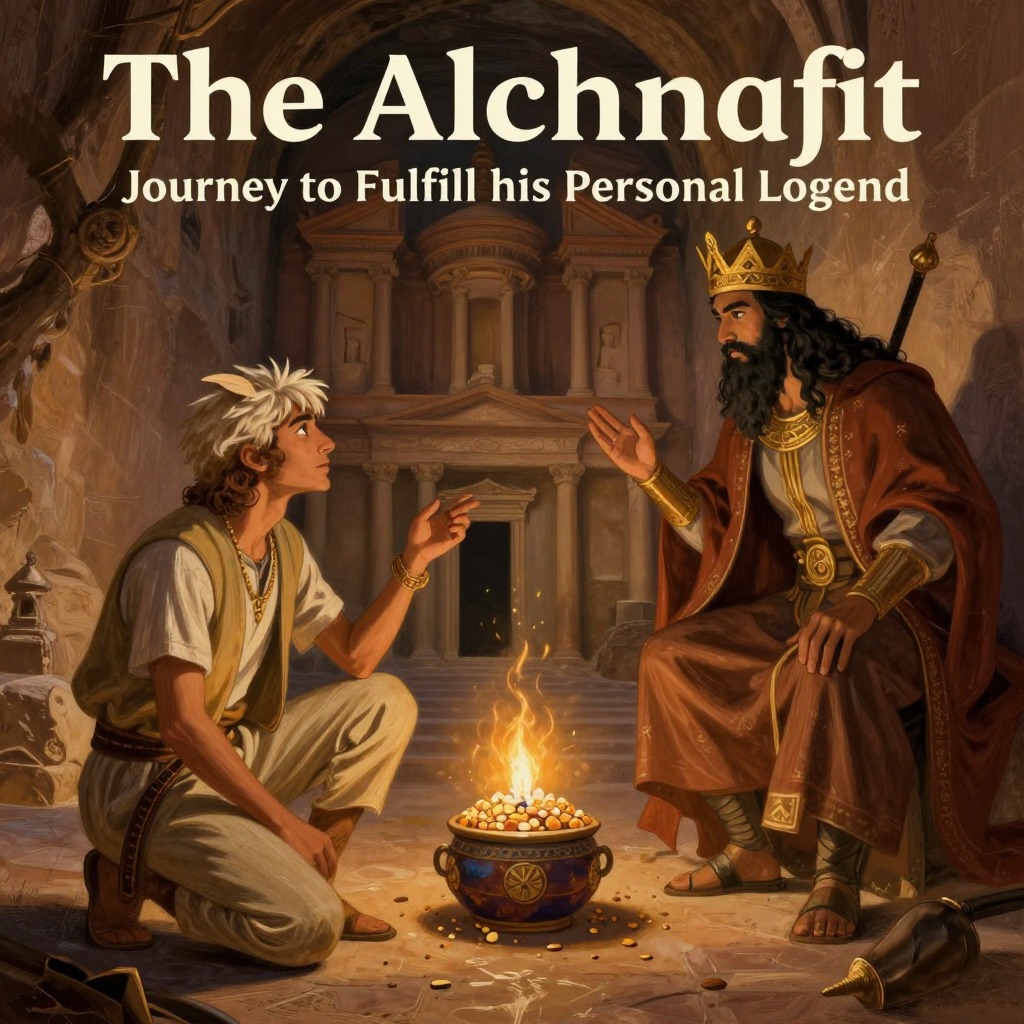
Santiago's Journey to Fulfill His Personal Legend
Santiago's entire arc from a shepherd in Andalusia to discovering the treasure at the abandoned church, following the guidance of omens and the king.
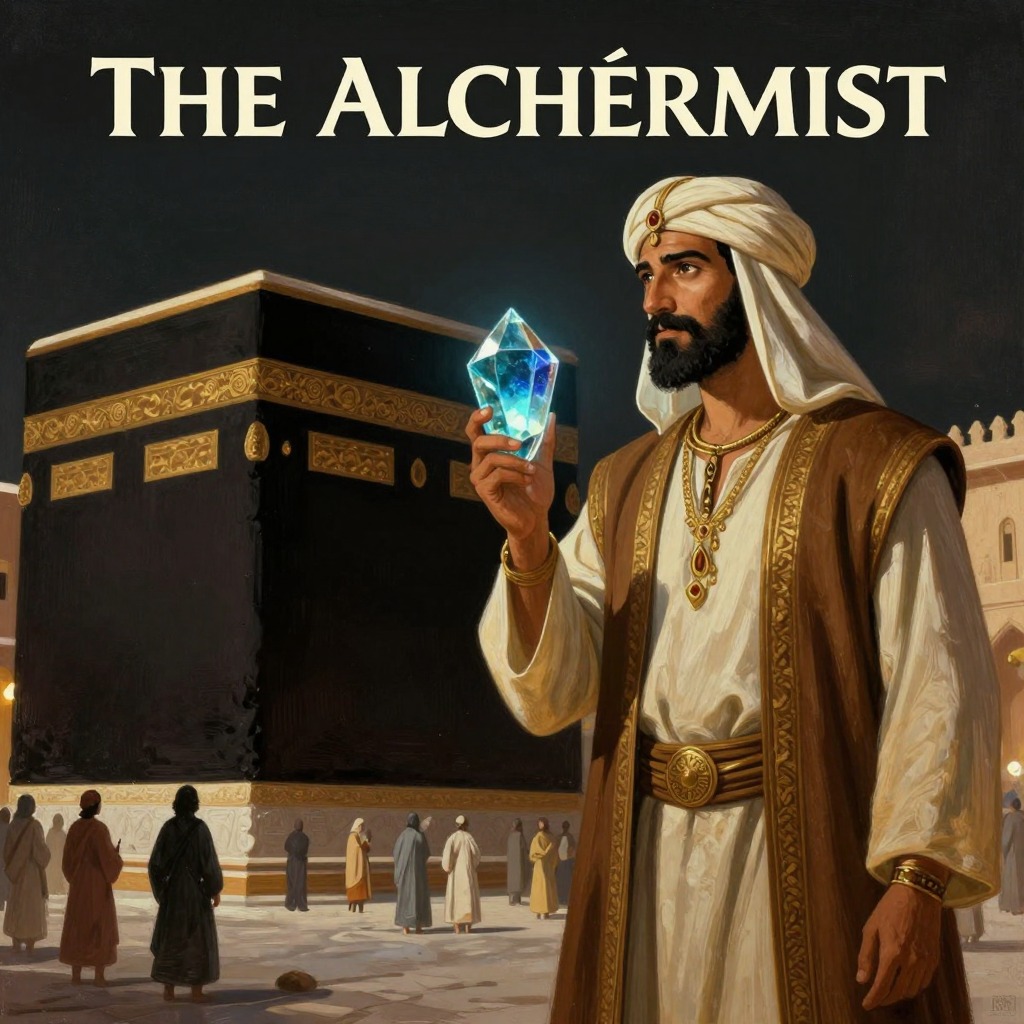
The Crystal Merchant's Dream of Mecca
The crystal merchant's lifelong desire to visit Mecca and his fear of realizing that dream, which serves as a foil to Santiago's determination.
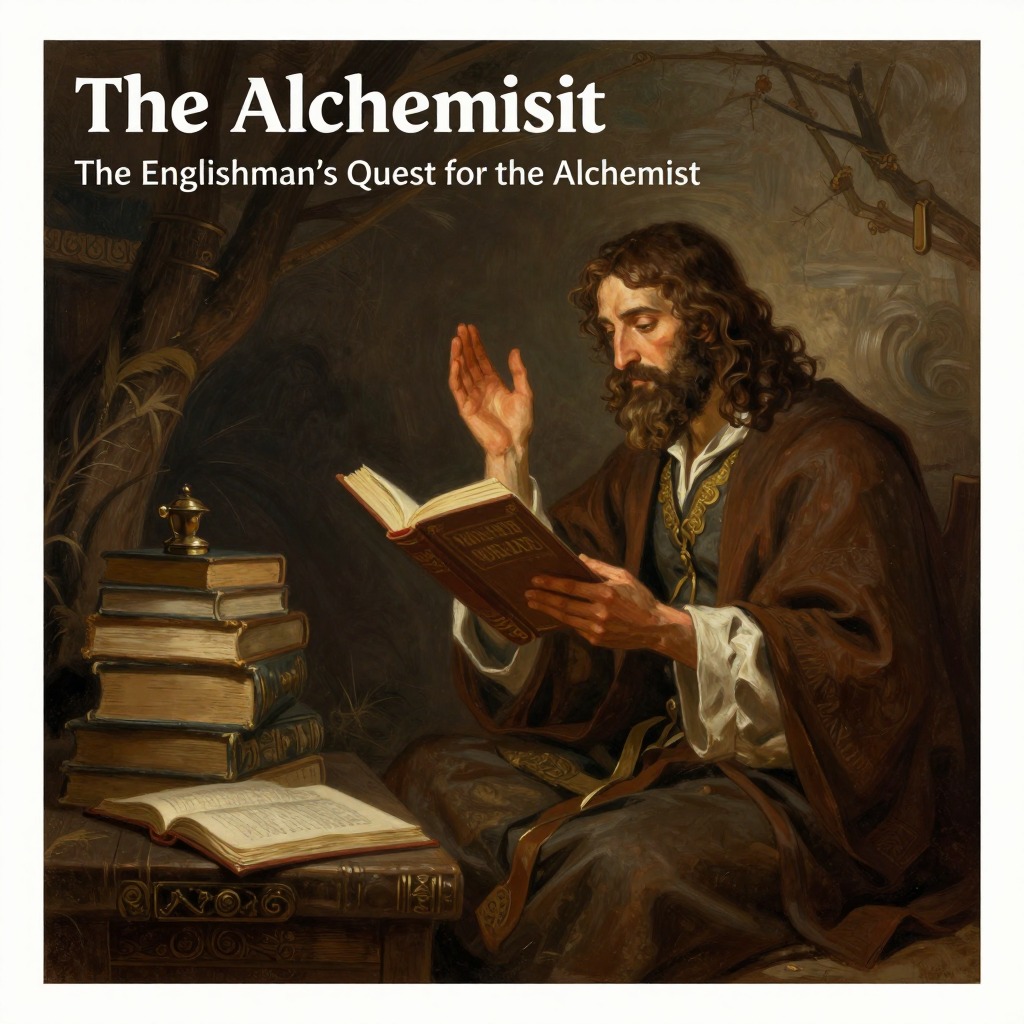
The Englishman's Quest for the Alchemist
The Englishman's intellectual pursuit of alchemy and his journey to find the legendary alchemist, contrasting book learning with experiential wisdom.
